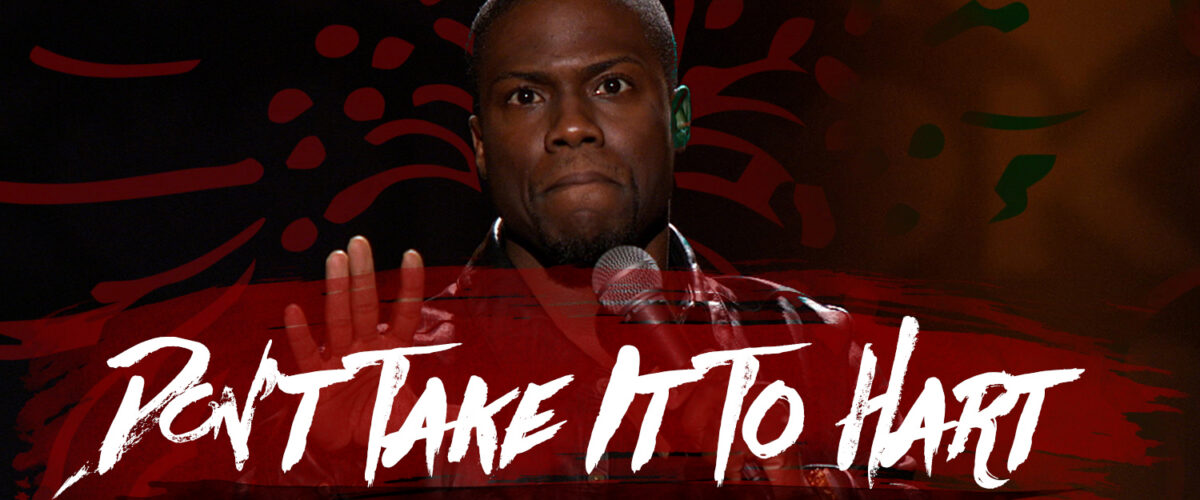
The news regarding Kevin Hart and his lost opportunity to host this year’s Oscars had escaped me until yesterday when a friend brought it my attention. We had been talking about how the 2019 ceremony is being lauded as the “Queerest” in the history of the Academy Awards. Several roles are being acknowledged across all major categories, and this is exciting news, even if every single actor who received a nomination isn’t a self-identifying member of the community. (We’ll unpack this later.)
In the midst of our conversation, I asked my friend who would be hosting this year’s ceremony. We took to Google, and that’s when I came across the news about Hart. If, like me, you are unfamiliar with the situation, the comedian was initially asked to headline the 2019 Academy Awards, but the offer was consequently revoked following the internet’s fail-safe ability to play private investigator.
Back in 2009 and 2011, Hart issued tweets, which blatantly depict anti-gay rhetoric and sentiment. In fact, he even “jokes” about harming his son if he were to display “gay behavior.”
I’m not one to follow comedians. It has just never been my thing. My experience with live comedy is that it is often to someone’s detriment, and usually it is marginalized groups who are subjected to the most ridicule. The gay and trans communities have long suffered as the butt of “comedic” fodder, and when you turn someone’s pain into a laughing moment, this should hardly be considered acceptable.
This isn’t to say I’m against jokes. In fact, I’m of the belief that humor can be found in any situation. However, I firmly believe there is a line that separates what is funny and what is harmful. As someone who has been at the pointed end of several gay jokes and comments, trust me—it isn’t funny. And this isn’t about being sensitive. It’s about moral standard. If you want to better understand the pain of targeted humor, check out Hannah Gadsby’s Netflix special, Nanette.
This being said, I am not much familiar with Kevin Hart and his comedy routines. Nor have I previously come across any of his tweets. (I also hardly use Twitter.) But when the internet took to uncovering the things he said, however many years ago, I knew I couldn’t let this one go, and not because I believe that we must all exhibit immaculate behavior.
Tweets posted by Kevin Hart in 2009 & 2011
Above are just some of the tweets Kevin Hart made, but I think they pretty much encapsulate his attitude towards LGBTQ+ individuals, if not just gay men. But I can promise you, if you have issues with one aspect of the community, it generally runs across the board.
What I would like to draw attention to is Hart’s blatant use of the word fag, his sentiment towards having a gay son, the casual commentary on AIDS, and the upholding of the same toxic masculine mentality that plagues most men who suffer from homophobia. Please tell me where the humor lies in any of these statements. Please tell me when it has ever been acceptable to call someone a fag. Please tell me when it was hysterical to “joke” about causing harm to a child because of their suspected sexuality.
In a 2015 interview with Rolling Stone, Hart was asked about his anti-gay statements on Twitter as well as its presence in his comedic material. The actor and comedian is quoted as saying, “I’d never apologize for what was never intended to be disrespectful—I’d never allow the public to win for something I know wasn’t malicious.” Further along in the interview, Hart suggests that people are “too sensitive.” In his words: “I think we love to make big deals out of things that aren’t necessarily big deals, because we can. These things become public spectacles,” he told reporter, Jonah Weiner.
“We love to make big deals out of things that aren’t necessarily big deals.”
Let us do an analysis on what should and should not be considered a big deal.
As reported by The Trevor Project and the CDC, “LGB youth seriously contemplate suicide at almost three times the rate of heterosexual youth.” In addition, “LGB youth are almost five times as likely to have attempted suicide compared to heterosexual youth.” And when it comes to family dynamic and acceptance, “LGB youth who come from highly rejecting families are 8.4 times as likely to have attempted suicide as LGB peers who reported no or low levels of family rejection.”
Are we laughing yet? Do we find these statistics funny?
The Trevor Project is an organization specifically dedicated to suicide prevention of LGBTQ+ youth. If anyone has the statistics on how many children who identify as Queer make an attempt on their lives, it would be them.
Let me make this perfectly clear: homophobia and transphobia do not account for quality comedic material, regardless of how many people are laughing or filling your pockets with money. When you laugh at someone else’s expense, especially when it is to demean and further marginalize a community that already suffers from inequality and physical harm, you become complicit in the problem. When we make a mockery of someone’s actual struggle, it only reinforces the fact that we, as a society, have a lot to look at and atone for.
Famed LGBTQ+ icon and trailblazer, Ellen DeGeneres, invited Kevin Hart onto her talk show for an “honest” conversation. Some thought this might be an opportunity for Hart to apologize for his behavior, and for Ellen to stand her ground. Have a look at the interview, and you will discover that neither of these things happened. In fact, Ellen vehemently offered her support for Hart, even going so far as to contact the Academy herself and see what strings the talk-show host could pull.
DeGeneres gushes over Hart, applauding him for his talent and brilliance as both an actor and comedian, even going so far as complimenting him in his most recent movie, The Upside. That’s all well and good. I am not here to debate Hart’s ability, but his morality. And as someone who claims to be a representative of the LGBTQ+ community, Ellen didn’t even call into question her fellow comic’s statements. Instead, she defamed the internet as a place full of bullies who are only out to destroy careers.
When Hart finally does speak, he decries that the whole situation has been an attack. He plays the victim. He uses the excuse, “I’m on social media everyday. I’ve got over 40,000 tweets. To go through 40,000 tweets to get back to 2008, that’s an attack.” And then he has the gall to say, “I’m a little upset because I know who I am. I don’t have a homophobic bone in my body.”
Tell me at what point calling someone a fag excuses you from being homophobic?
Of course, there is another side to this argument, and that is at what point do we find certain behavior permissible? Should we all be held accountable for our past? After all, no one is perfect. And I’m sure if we were to comb through our own individual histories, we’d come across some knots and tangles. But just who makes it up to the chopping block?
Hart says that he has grown, that he has learned. But is this just lip-service? At what point do we just take people’s word for their self-professed evolution? You want to tell me that you don’t have a homophobic bone in your body, then prove it. Put your money (all $120 million of your net worth) where your mouth is. I want hard evidence that you are making strides to overcome the hate-speech and vitriol for which you are now being held accountable, and then just maybe I’ll believe you.
It’s important to understand that celebrities are people, but they are people with incredible exposure. They have voices and platforms louder and more expansive than most of us ever will. When you get to Hart’s level, your influence becomes international. That’s a lot of eyes and ears tuned into what he has to say. Many tune in for a good laugh, but at whose expense are you willing to partake in the humor?
Toward the end of his interview with Ellen, DeGeneres makes a comment about how Hart’s talent will never allow him to lose; that he is too good at what he does. But talent does not give you a bypass. Artistry and sophistication and class do not give you a bypass from the things you say. I don’t care who you are or what incredible talents you have. When you actively use your voice to spread hate, it is an attack, and you must be prepared to pay the consequences.
What truly bothers me the most about the Ellen interview is that at no point does Hart actually say that he is sorry. Instead, DeGeneres does all of the apologizing for him. “You’ve said your sorry. You’re saying it again now.” It’s a masterful act of ventriloquy to hear Hart’s apology come from Ellen’s mouth and in her voice.
Ellen does address the seriousness of the issue, stating that many children do suffer from bullying and suicidal tendencies. But she is already the informed party. She isn’t allowing Hart to demonstrate that he has done the work. She is doing it for him, and I find that inexcusable.
Yes, I want you to grow. Yes, I want you to realize the error in the things you’ve said, but you must be the one to say it. Show an active stance in your own evolution, not offensive nonchalance. That is not indicative behavior of growth. Instead it reeks of someone who is butt hurt over losing an esteemed opportunity.
So, Mr. Hart, when you want to claim an attack and cry slander against your name and career, my advice to you is this: take note from Roseanne Barr, and learn that your mouth shouldn’t write a check that your ass can’t cash. (Thanks, Allison!)
P.S: Don Lemon addresses this issue expertly. View that video here.